
סיפור בלשי של ממש
לפעמים מחקר על יצירת אמנות מתחיל בשאלה קטנה ומסתיים בסיפור בלשי של ממש.
במהלך עבודות שימור של לוח קרמיקה מעשה ידי האמן האיטלקי עמנואל לוצאטי (EmanueleLuzzati), השמור כיום במוזיאון מנליו טרוקו באלביסולה (Museo della Ceramica “Manlio Trucco”, Albisola Superiore) שבאיטליה, ביקשה המשמרת האיטלקייה ברברה קקוצ'י (Barbara Checcucci) להבין מהו מקורו של הלוח וכיצד הגיע למקומו הנוכחי. מכאן החל מסע מחקרי שחיבר בין איטליה לישראל. קקוצ'י פנתה לסקר אמנות הקיר משום שמצאה בו תיעוד של עבודותיו של לוצאטי (שפעל גם בישראל), ובהן לוח זהה ללוח המצוי אצלה, ובקשה להבין כיצד הגיע הלוח למקומו הנוכחי.
השלב הראשון היה איתור צילום היסטורי שיוחס ליצירת קיר של לוצאטי במשרדי אל על בלונדון. אולם מהשוואת הצילומים, בחינת הארכיונים והתכתבות עם אנשי מקצוע בישראל ובאיטליה הבנו שהזיהוי היה מוטעה. היצירה המצולמת לא הייתה שייכת כלל למשרדי אל על בלונדון, וייתכן שזו הייתה יצירה שהכין לוצאטי למשרדי צים בתל אביב עשר שנים קודם לכן.
כדי לבדוק את ההשערה הזאת יצרנו קשר עם חברת צים, עם ארכיונים שונים ועם הספרייה הלאומית. במקביל התחלנו לאתר ידיעות עיתונאיות מן התקופה. דווקא העיתונות סיפקה את אחת מפריצות הדרך החשובות במחקר: נמצאו כתבות שהעידו כי לוצאטי עבד עבור חברת צים, ואף ביקר בישראל בשנת 1962 במסגרת שיתוף הפעולה עימה. הידיעות הללו חיזקו את האפשרות שכבר כעשר שנים קודם לכן יצר והתקין עבור החברה את יצירת הקיר במשרדיה בתל אביב – אותה יצירה שנחשבה במשך שנים בטעות ליצירה שהותקנה בלונדון, ובמשרדיה של חברת תחבורה אחרת לחלוטין.
בהמשך, במסגרת מחקרה של ברברה קקוצ'י ובסיועו החשוב של הארכיון ההיסטורי של מחוז ליגוריה (Archivio Storico della Regione Liguria), אותר מסמך רשמי משנת 1958, המעיד כי רשות התיירות של אלביסולה אישרה את רכישתו של אחד מלוחות הקרמיקה של לוצאטי. מסמך זה, יחד עם הצילומים, הידיעות בעיתונות וההתכתבויות עם הארכיונים, אפשרו להתחיל לשחזר את מסלול חייה של היצירה ולחבר מחדש חלקים בפאזל שנראה היה שאבד.
כרגע ישנן שאלות רבות תלויות ועומדות: מדוע הלוח אינו מופיע באף צילום אחר של משרדי צים? האם העבודה אכן הותקנה או רק נוצרה עבור צים אך נותרה בסופו של דבר באיטליה? האם קוטלגה בטעות גם באוספים אחרים בספריה הלאומית? מדוע אין בידינו תיעוד של גב העבודה, ואם נמצא תיעוד כזה, מה נגלה בו?
המחקר עדיין נמשך, וברברה קקוצ'י ממשיכה לחקור את תולדות היצירה ואת מקורה. עדיין איננו יודעים בוודאות כיצד התפצלה היצירה, האם היו לוחות נוספים, ומה עלה בגורלם. אולם כבר עכשיו ברור שמחקר בין-תחומי – המשלב תיעוד היסטורי, עיתונות, ארכיונים, עבודת שימור והשוואה חזותית יכול לסייע בפענוח תעלומות כאלו. זה בדיוק סוג המחקרים שסקר אמנות הקיר שואף לקדם: לא רק לתעד יצירות אמנות קיר, אלא גם לחשוף את סיפורן, להתחקות אחר גלגוליהן ולהחזיר להיסטוריה פרקים שנשכחו. לפעמים כל מה שצריך הוא צילום ישן, מסמך אחד, כתבה נשכחת – והרבה מאוד סקרנות.
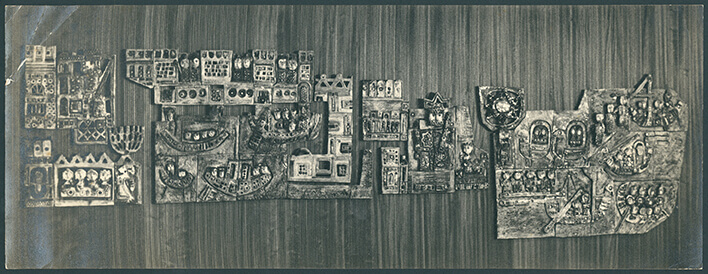
City by the Sea | Entrance Lobby of the ZIM Offices, 22 Rothschild Blvd., Tel Aviv–Jaffa // Emanuele Luzzati // 1959
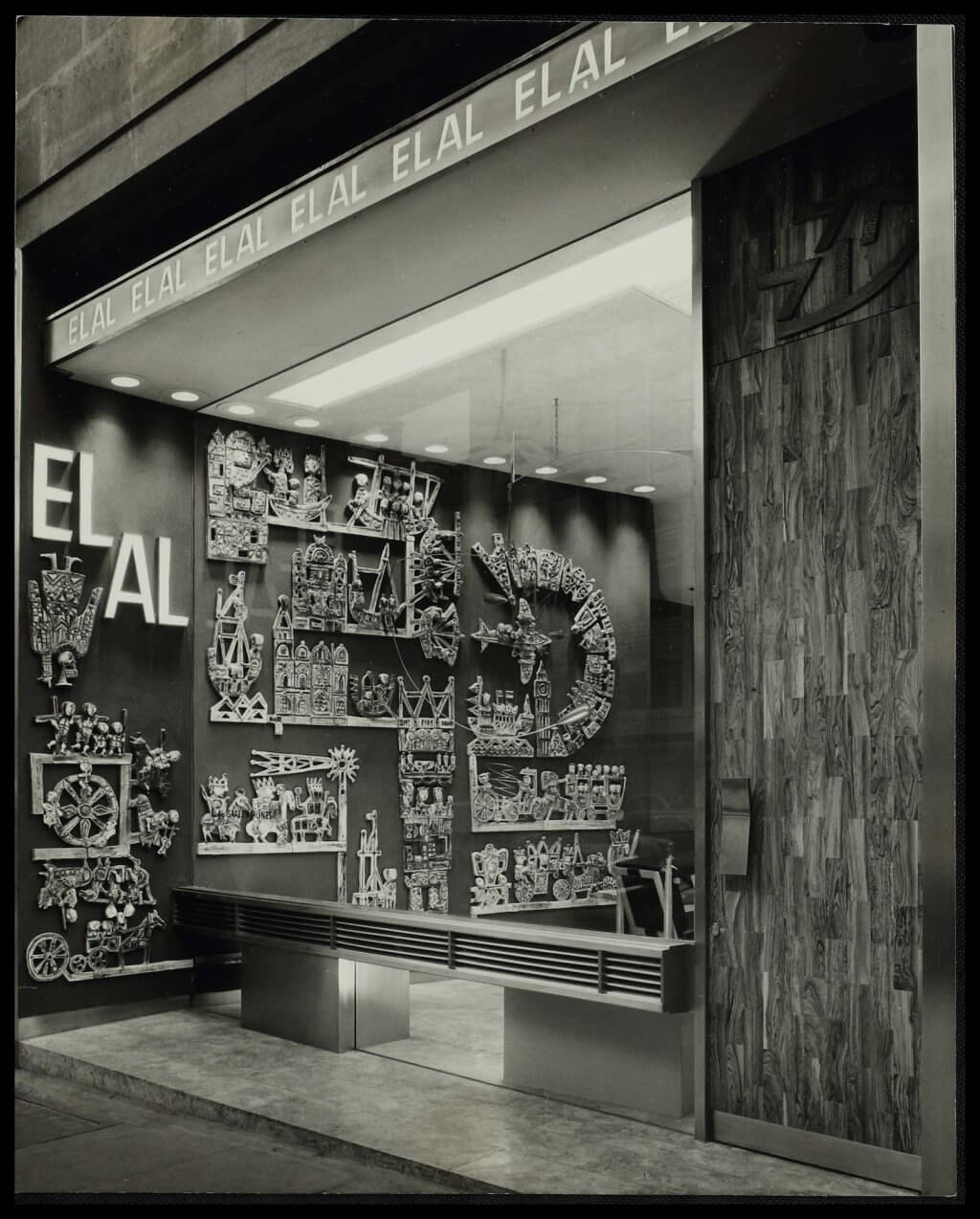
תולדות התחבורה | לונדון, בריטניה // עמנואל לוצאטי // 1959
History of Transportation | London, United Kingdom // Emanuele Luzzati, 1959
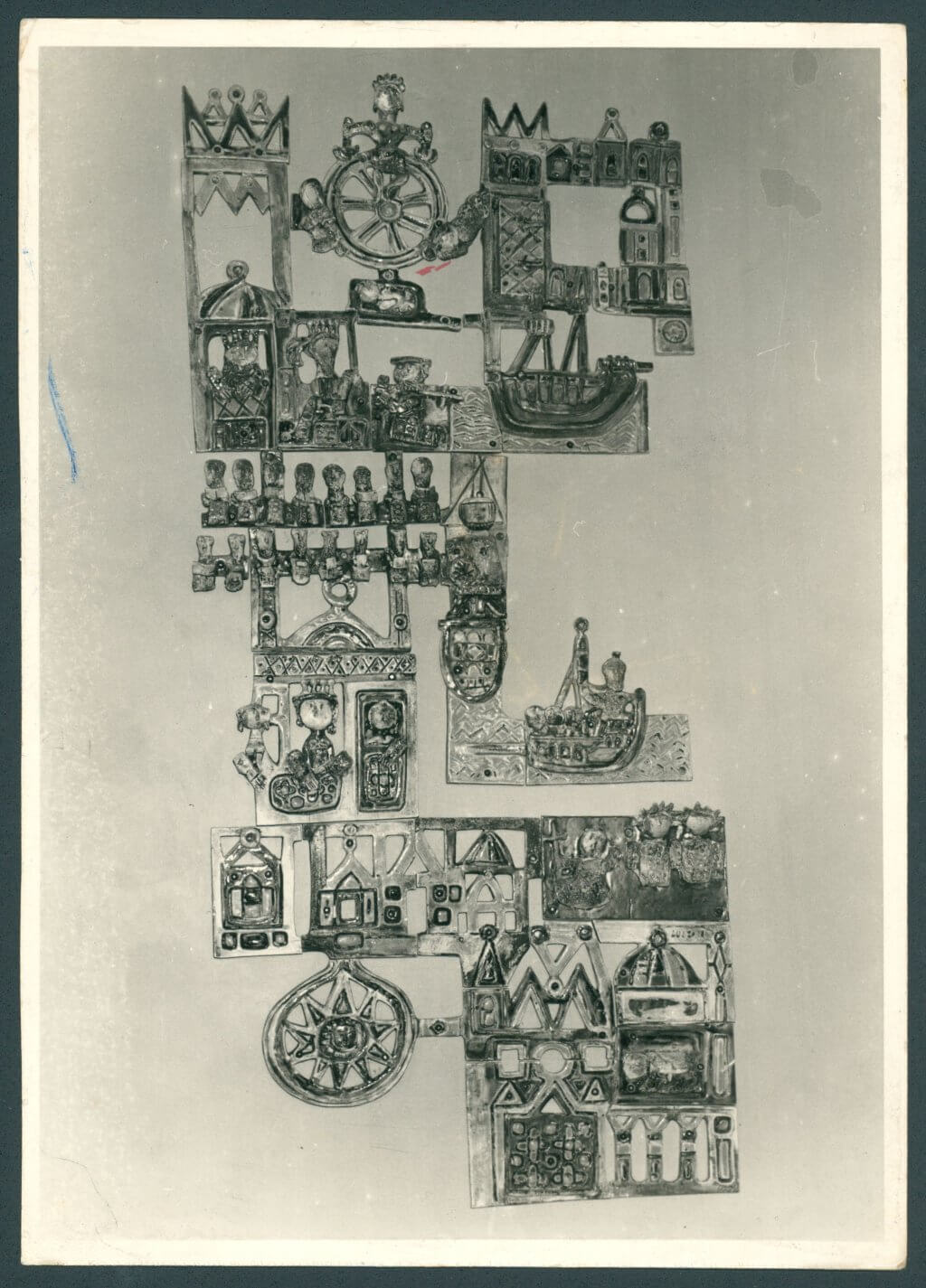
A wall art work allegedly displayed on one of the walls of the ZIM offices in Tel Aviv. Unknown photographer. Dora Gad Archive, National Library of Israel.
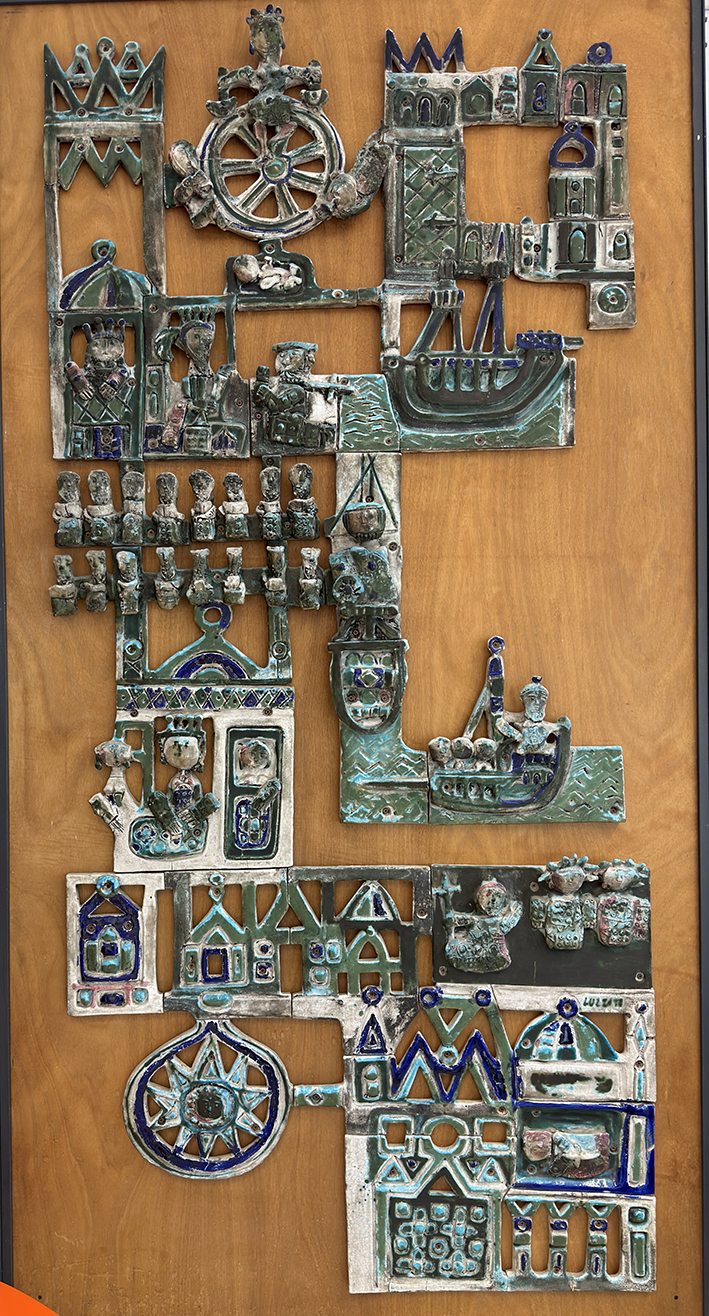
The work, created by the Italian artist Emanuele Luzzati, that was entrusted for conservation to conservator Barbara
Checcucci by the Museo della Ceramica “Manlio Trucco” in Albisola Superiore, Italy.
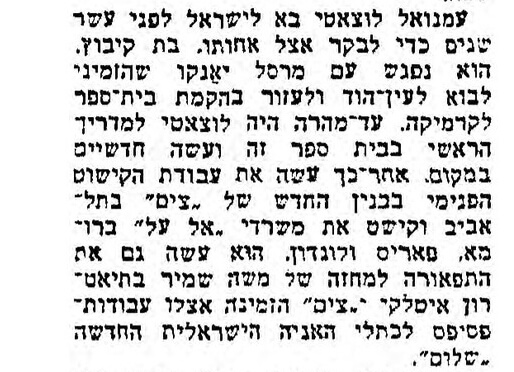
Davar, 16.11.1962, reporting about
Luzzati's visit to Israel in 1962.
Sometimes, research into a work of art begins with a small question and ends up becoming a genuine detective story.
During conservation work on a ceramic panel by the Italian artist Emanuele Luzzati, now held at the Museo della Ceramica “Manlio Trucco” in Albisola Superiore, Italy, Italian conservator Barbara Checcucci set out to discover the panel’s origins and how it had arrived at its present location. This marked the beginning of a research journey connecting Italy and Israel. Checcucci contacted the Israeli Wall Art Survey after finding documentation there of works by Luzzati, who was also active in Israel, including a panel identical to the one in her care, and asked for help in understanding how it had reached its current location.
The first step was to locate a historical photograph that had been attributed to a wall work by Luzzati at the El Al offices in London. However, by comparing photographs, examining archival materials, and corresponding with professionals in Israel and Italy, we realized that this identification was incorrect. The work shown in the photograph did not belong to the El Al offices in London at all, and it may have been a work that Luzzati had created for the ZIM offices in Tel Aviv ten years earlier.
To investigate this hypothesis, we contacted ZIM, various archives, and the National Library of Israel. At the same time, we began searching for contemporary newspaper reports. It was the press that provided one of the most important breakthroughs in the research: we found articles indicating that Luzzati had worked for ZIM and had even visited Israel in 1962 as part of his collaboration with the company. These reports strengthened the possibility that, about a decade earlier, he had created and installed the wall piece for ZIM’s offices in Tel Aviv -the very work that for years had mistakenly been identified as an installation in London, in the offices of an entirely different transportation company.
Later, through Barbara Checcucci’s research and with the valuable assistance of the Archivio Storico della Regione Liguria, an official document from 1958 was located, showing that the Albisola tourism authority had approved the purchase of one of Luzzati’s ceramic panels. Together with the photographs, newspaper reports, and correspondence with the archives, this document has allowed us to begin reconstructing the life story of the work and reconnecting pieces of a puzzle that had seemed lost.
Many questions, however, remain unanswered. Why does the panel not appear in any other photographs of ZIM’s offices? Was the work actually installed there, or was it merely created for ZIM but ultimately remained in Italy? Could it also have been catalogued incorrectly in other collections at the National Library of Israel? Why do we have no documentation of the back of the work – and if such documentation is found, what might it reveal?
The research is still ongoing, and Barbara Checcucci continues to investigate the history and provenance of the work. We still do not know for certain how the work came to be separated, whether additional panels existed, or what became of them. What is already clear, however, is that interdisciplinary research – combining historical documentation, newspapers, archival research, conservation work, and visual comparison – can help unravel mysteries such as this one.
This is precisely the kind of research that the Israeli Wall Art Survey seeks to promote: not only documenting works of wall art, but also uncovering their stories, tracing their journeys, and restoring forgotten chapters to history. Sometimes all it takes is an old photograph, a single document, a forgotten newspaper article – and a great deal of curiosity.